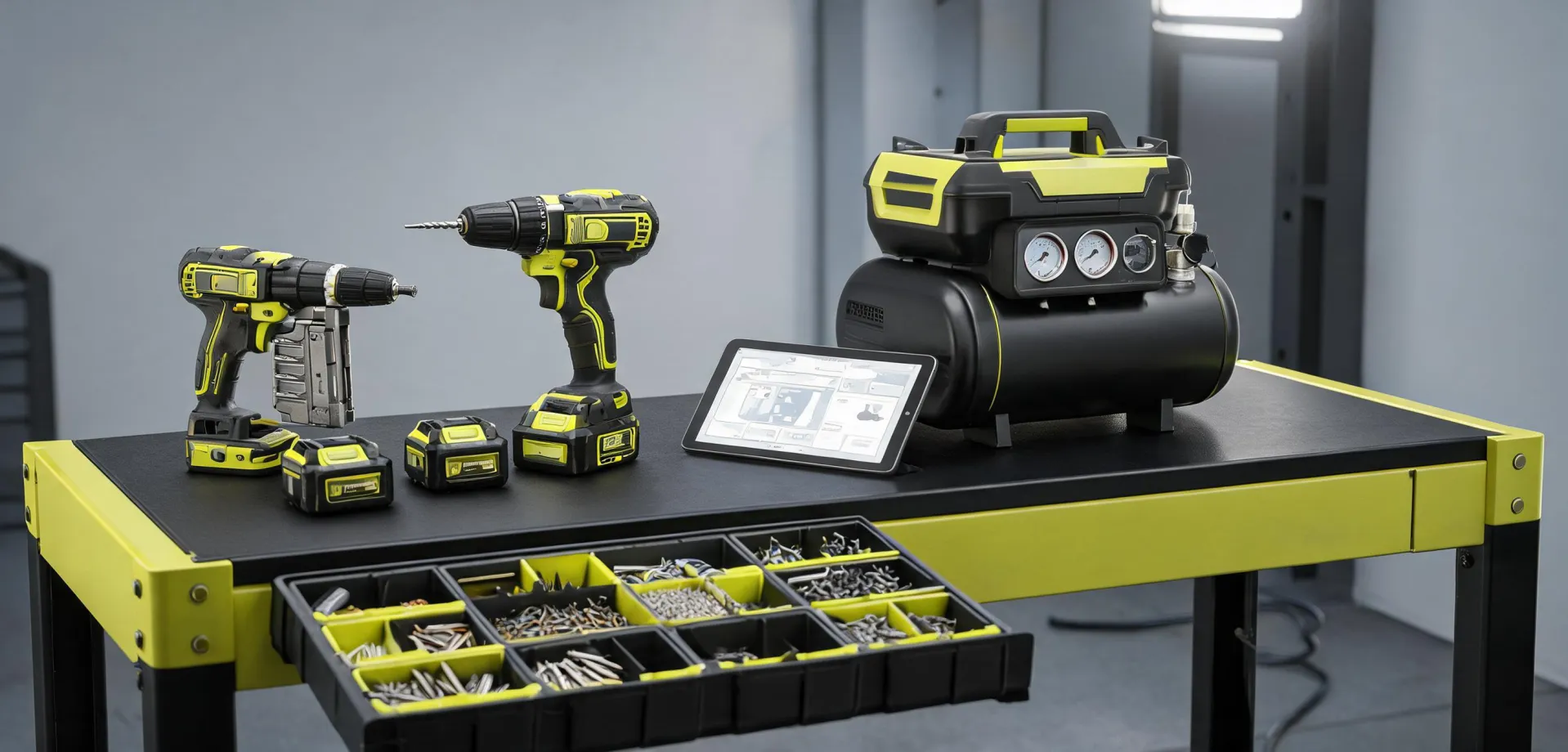
Metabo HPT field service bench

Service Workflow

Metabo HPT Services Keep Tool Fleets Productive

Service is treated as a workflow, not an afterthought. Crews need a clear path from model identification to warranty guidance, parts routing, compressor questions, nailer behavior, battery platform planning, and jobsite readiness. Metabo HPT support is organized around the way supervisors describe problems in the field: a nailer is misfiring, an impact driver is losing runtime, a compressor must serve two trim crews, or a battery platform needs to cover both drilling and cutting without extra chargers.

Service Cards

Three support lanes with clear ownership

Each lane is shaped for practical decisions. The goal is to help a purchasing lead, site supervisor, or service coordinator identify the next action without digging through unrelated product language.

01

Warranty & Registration

Product registration helps connect model data, ownership details, and coverage expectations before a service event occurs. The support path can then reference the tool family, purchase timing, and intended use with fewer clarifying emails.

02

Fleet Troubleshooting

Runtime drops, nail feed issues, air delivery questions, fastener compatibility concerns, and charger behavior are routed by tool class so teams can separate operator setup from possible service requirements.

03

Platform Planning

Battery, charger, bare-tool, compressor, and pneumatic accessory plans can be reviewed together. That keeps new purchases aligned with the equipment already moving through trucks, gang boxes, and workshop benches.

Process Timeline

From intake to action in numbered steps

1

Capture the tool context

Start with model number, serial number if available, jobsite application, material type, fastener or bit used, battery platform, and the behavior that triggered the request.

2

Separate setup from service

Support reviews whether the issue appears related to accessory fit, air pressure, charger condition, battery age, firing mode, workload, or a component that needs service review.

3

Route the next step

The response may recommend a setting check, compatible accessory, warranty path, parts inquiry, or tool platform adjustment for the crew's actual work sequence.

4

Document the outcome

For fleet users, the final recommendation should be stored with the tool family so future requests start with better context and less downtime.

Guarantee Banner

Service language that crews can act on

Every service conversation should translate into a practical decision: keep using the tool with a corrected setup, schedule inspection, adjust compressor delivery, standardize batteries, or select a better fastener and accessory combination.

Get in touch

Send a support request with enough detail to skip the generic back-and-forth.

  • Include model and serial data when available.
  • Describe material, fastener, bit, blade, or accessory setup.
  • Note compressor pressure, battery size, or charger behavior.
  • Tell us whether the tool is used by one operator or a shared crew.